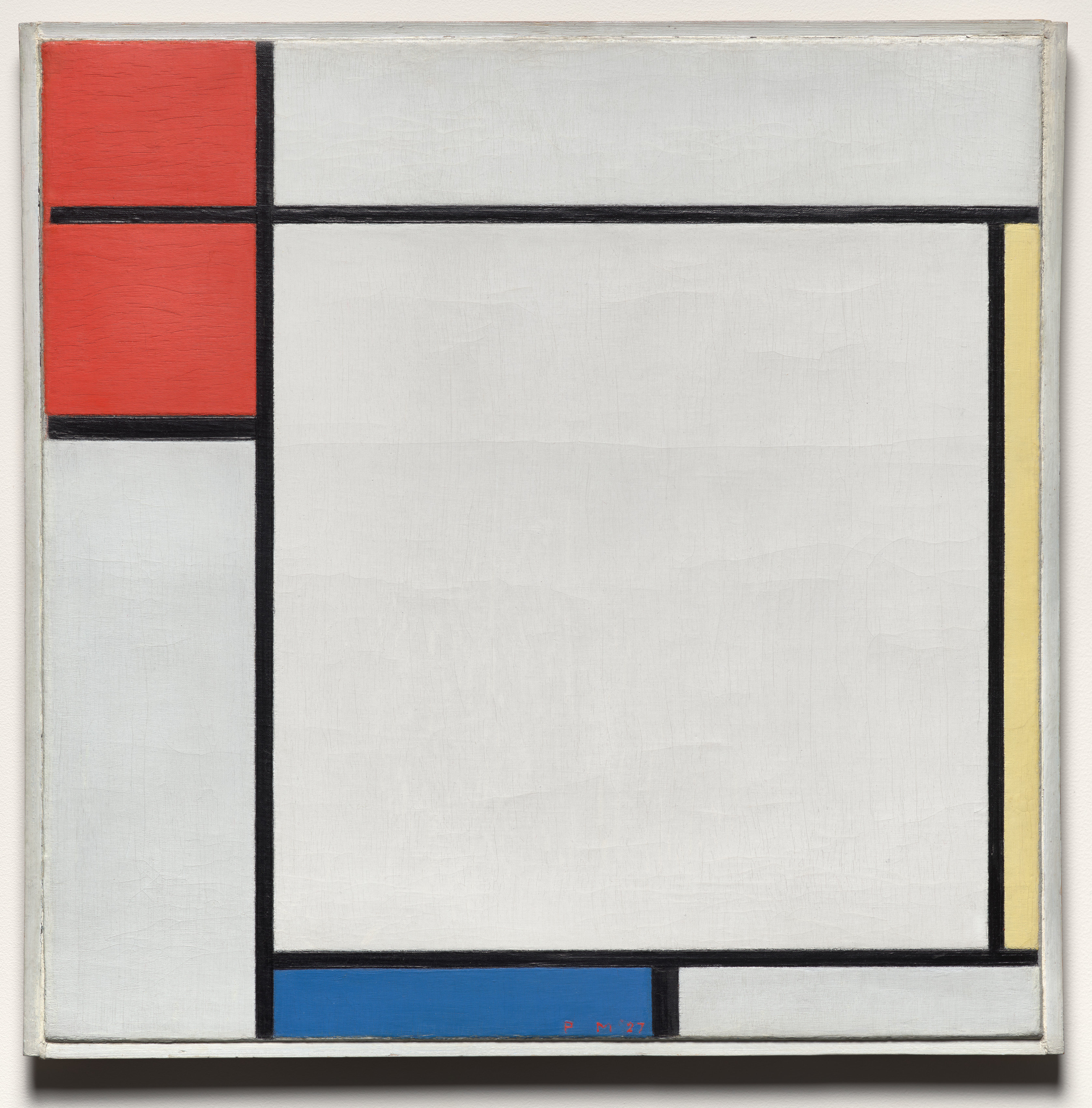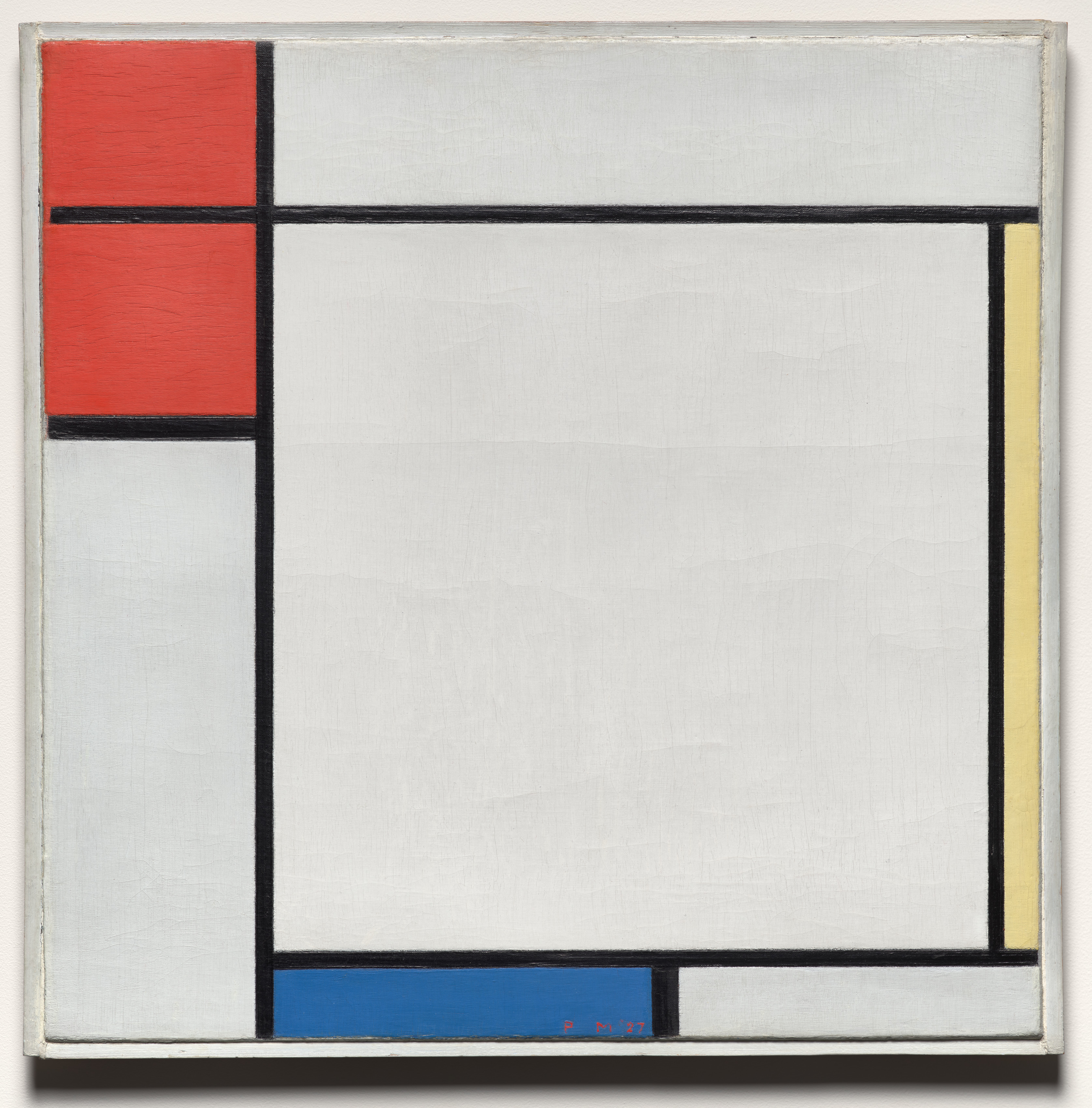
Composition with Red, Yellow, and Blue
Listen by age
- Ages 4–7 Sign in to preview Gentle looking, simple words, one small detail to find.
- Ages 8–12 Sign in to preview More clues about composition, artist choices, and visible evidence.
- Teens & Families Sign in to preview Context and discussion prompts for older kids and adults together.
About Composition with Red, Yellow, and Blue
Mondrian built this painting with very strict rules: only straight lines, rectangles, and a small team of colors.
But the result is not stiff. Two red blocks pull toward the upper left. A thin strip of yellow presses against the right edge. Blue settles near the bottom. The spaces are not equal, and the two sides do not match. Somehow, the square still holds together.
Mondrian had once painted trees and landscapes. Over many years, he removed trunks, branches, curves, and recognizable objects until horizontal and vertical lines became enough.
This picture works a little like balancing objects on a tray. Move the blue block upward in your imagination, or let the yellow grow wider, and the whole painting changes its weight.
Even the thin wooden frame joins the game: Mondrian painted it the same gray as the canvas, so the little world of lines and colors seems to build right to its edge.
Artwork details
- Artist
- Piet Mondrian
- Date
- 1927
- Medium
- Oil on canvas
- Dimensions
- 49.5 × 49.5 cm
- Collection
- Cleveland Museum of Art
- Accession number
- 1967.215