Mona Lisa
Listen by age
- Ages 4–7 Sign in to preview Gentle looking, simple words, one small detail to find.
- Ages 8–12 Sign in to preview More clues about composition, artist choices, and visible evidence.
- Teens & Families Sign in to preview Context and discussion prompts for older kids and adults together.
About Mona Lisa
The world’s most famous smile will not sit still.
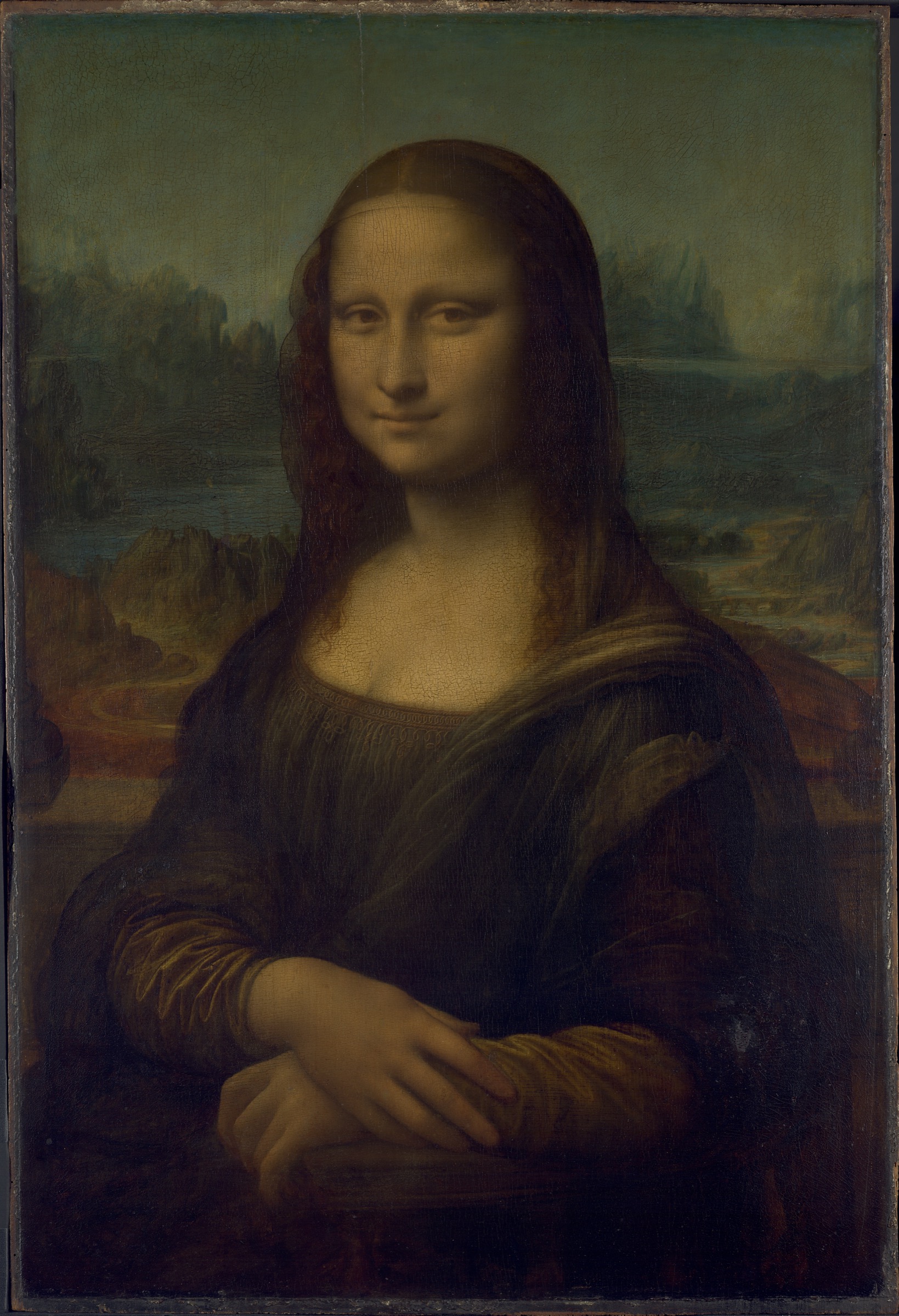
Look at Mona Lisa’s mouth. Her expression may seem calm and easy to read. Now let your eyes move toward her cheeks or eyes. Does the smile feel exactly the same? Leonardo softened the edges around her mouth and eyes with many thin layers of paint. Light slides into shadow without a hard line, so the expression can seem to shift as our attention moves.
That does not mean she is hiding one answer that we must guess. The Louvre identifies her as Lisa Gherardini of Florence, but the painting leaves her thoughts to herself.
Behind her, a winding road, water, rocks, and distant land form a landscape that feels almost dreamlike. Leonardo worked on the painting over many years. More than five centuries later, its cleverest trick is still wonderfully simple: we look at her, and she never quite lets us finish looking.
Artwork details
- Artist
- Leonardo da Vinci
- Date
- 1503–1519
- Medium
- Oil on poplar panel
- Dimensions
- 79.4 × 53.4 cm
- Collection
- Musée du Louvre
- Accession number
- INV 779 / MR 316
Sources & rights
Leonardo da Vinci, Mona Lisa, c. 1503–1519. Musée du Louvre, INV 779 / MR 316. Image via Wikimedia Commons (C2RMF), Public Domain.