The Sleeping Gypsy
Listen by age
- Ages 4–7 Sign in to preview Gentle looking, simple words, one small detail to find.
- Ages 8–12 Sign in to preview More clues about composition, artist choices, and visible evidence.
- Teens & Families Sign in to preview Context and discussion prompts for older kids and adults together.
About The Sleeping Gypsy
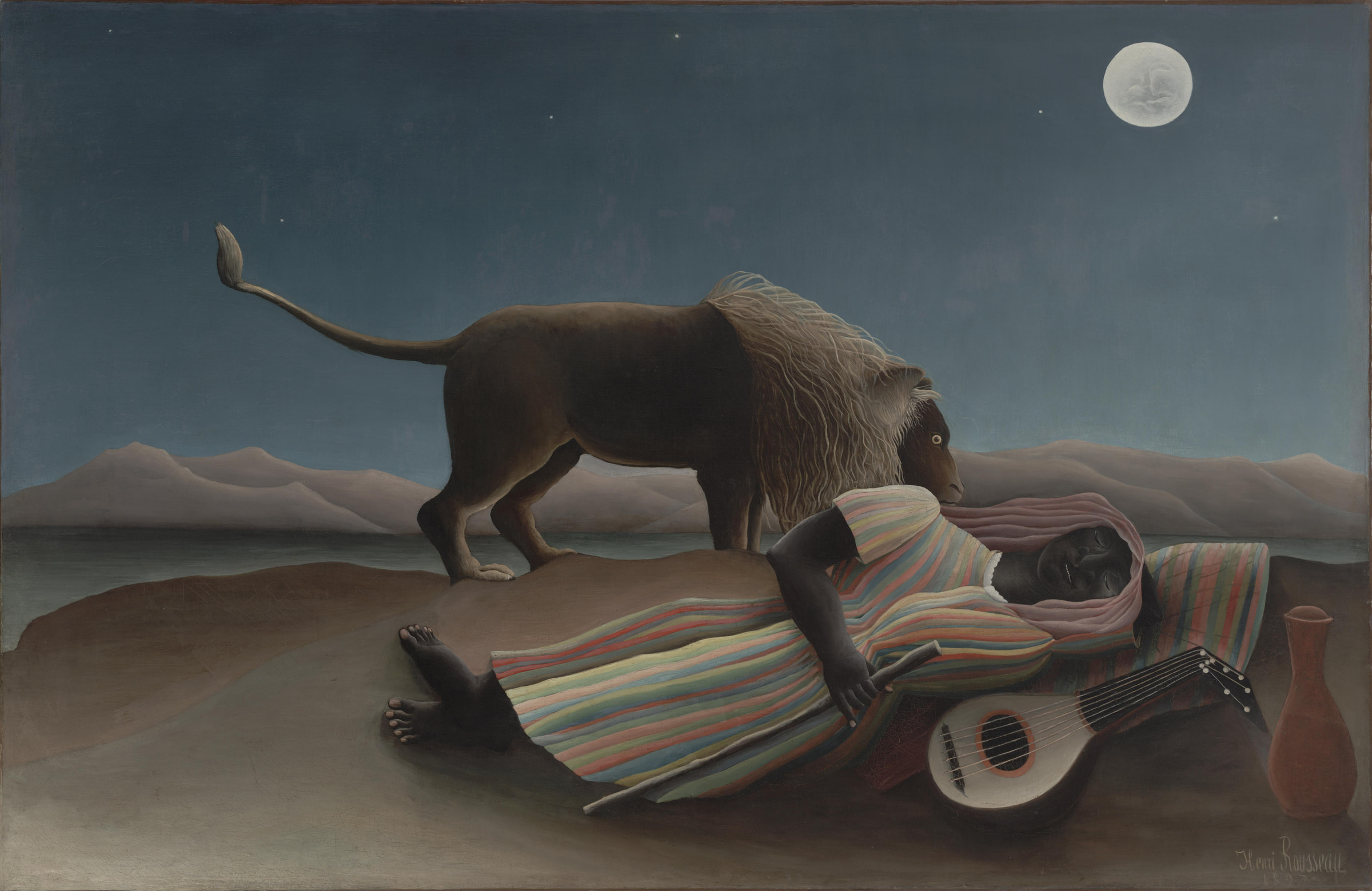
A traveler is asleep beneath the moon. A lion has come close enough to catch the traveler’s scent. This should be the beginning of a noisy adventure—but the painting refuses to continue.
The lion does not attack. The traveler does not wake. Striped clothes, a stringed instrument, and a water jar rest against a smooth, empty landscape. Round hills repeat in the distance, making the scene feel as carefully arranged as a dream.
Henri Rousseau painted each object with a clear outline, so everything is easy to find. The mystery comes from the pause between them. The lion may be curious, the traveler may be dreaming, and danger may be real—or may pass without touching her.
The English title is the museum’s historical title. Today, “Gypsy” can be an outdated and hurtful term for Romani people, so it should not be used as a general name for real communities.
Rousseau leaves the next moment to us. The moon shines, the traveler sleeps, and the lion keeps watch.
Artwork details
- Artist
- Henri Rousseau
- Date
- 1897
- Medium
- Oil on canvas
- Dimensions
- 129.5 × 200.7 cm
- Collection
- Museum of Modern Art
- Accession number
- 646.1939
Sources & rights
Henri Rousseau, The Sleeping Gypsy, 1897. The Museum of Modern Art, 646.1939. Image via Wikimedia Commons (Google Art Project), Public Domain.