Clear, traceable sources for the artworks you see.
Kids Art Lab keeps artwork sources, image credits, and available rights information close to each artwork and its story.
How we source images
No loose image sourcing
We do not use random search results, wallpaper sites, social reposts, or images with unknown origins.
Whenever possible, artwork images come directly from official museum collections or trusted open-access records. When the collection record and the digital image source are different, we identify both.
On every artwork page
What families can check
Each artwork page identifies the artist, title, date, collection, and source record. It also includes the source and credit information available for the particular digital image used on the page.
An artwork and its digital image are not always governed by the same rights. An old artwork may be in the public domain, while a particular photograph or digital reproduction may have its own credit, licence, or conditions of use.
Our standard
Sources that are clear and traceable
A beautiful image is not enough. Its origin should be understandable, traceable, and appropriate for the way it appears on the site.
Traceable records
Families can follow the links to the museum collection record and, when different, the source of the digital image used.
Clear attribution
Artist, title, date, collection, image source, and required credit remain connected to the artwork.
Separate review
Artwork identity, editorial quality, audio quality, image quality, and digital image rights are reviewed separately.
Artwork sources
Collection records, image sources, and available rights information
The entries below identify the collection record and the particular image source used for each published artwork. Rights notes apply to the digital image identified in that entry and should not be read as a general statement about every reproduction of the artwork.
Mary Cassatt, The Child’s Bath, 1893. Art Institute of Chicago, 1910.2. Image via Wikimedia Commons (sourced from the Art Institute of Chicago), Public Domain.
Charles Demuth, I Saw the Figure 5 in Gold, 1928. The Metropolitan Museum of Art, 49.59.1. Image via Wikimedia Commons (The Met Open Access donation), CC0.
Osman Hamdi Bey, The Tortoise Trainer, 1906, first version. Pera Museum, Salon no. 783. Image via Wikimedia Commons (Google Art Project), Public Domain.
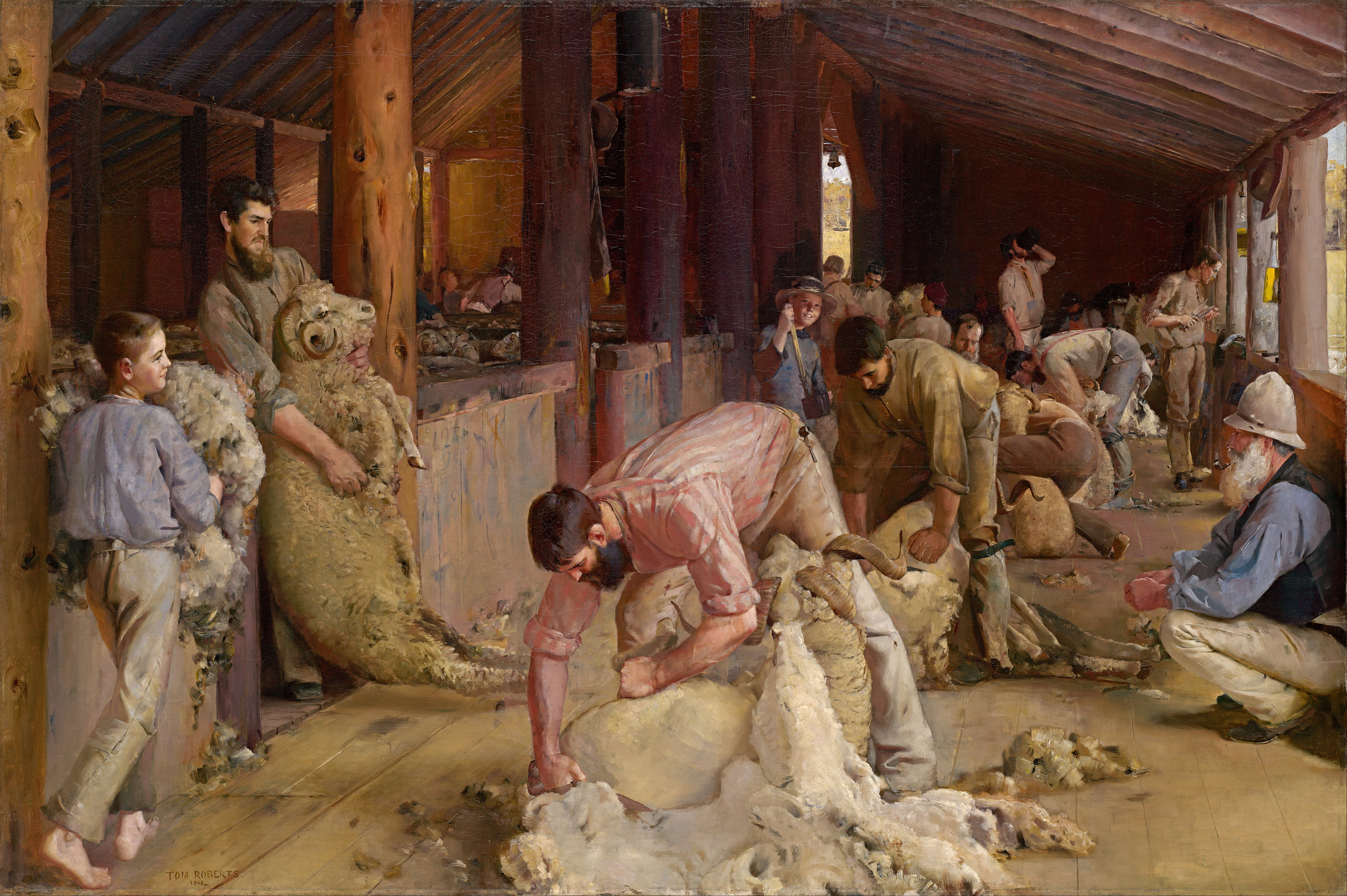
Tom Roberts, Shearing the Rams, 1890. National Gallery of Victoria, Melbourne, 4654-3. Image via Wikimedia Commons (Google Art Project), Public Domain.